Riverbank Industrial Complex · Riverbank, California

Investing in the future of Riverbank.

Riverbank Technology Center is a joint project between Aemetis and Spartan, establishing the first Sustainable Computing Facility in the US at the existing Riverbank Industrial Complex, and inviting our neighbors to help build a stable, long-term community partner.

Responsible Development Commitments

How we will plan, build, and operate.

Published for our neighbors, Riverbank city leaders, and Stanislaus County officials: seven commitments that govern this project from design through daily operation.

  1. 01 Protect the local grid and electricity rates
  2. 02 Use water responsibly
  3. 03 Keep operations clean and quiet
  4. 04 Design with neighbors in mind, on existing industrial land
  5. 05 Engage regularly with the community
  6. 06 Explain community benefits clearly
  7. 07 Follow through on our commitments
  8. Download the full PDF
01 · A New Standard

A Sustainable Computing Facility.

As a leading developer and producer of renewable fuels and low-carbon energy, Aemetis, in partnership with Spartan, is defining a new standard for how communities participate in next-generation computing infrastructure. We call it the Sustainable Computing Facility, or SCF: economic development that adds jobs, repeatable tax revenues, and a sustainable project that doesn't pollute or deplete natural resources.

01

Zero continuous water usage for cooling. Cooling relies on next generation closed-loop systems requiring a one-time charge of water consistent with the annual needs of a few homes, and leverages recycled on-site non-potable water, not municipal drinking or agricultural water supplies.

02

Sustainable power sourcing. Power is sourced from non-local utility power production, using existing grid and transmission capacity already built to serve the site rather than requiring new capacity, with potential future power produced onsite. The project will pay for any onsite utility upgrades the facility requires, not ratepayers or taxpayers.

03

Reuse of existing industrial buildings. Computing equipment is housed inside existing structures, avoiding the need for new construction and maintaining noise levels below the amount allowed by existing regulations.

04

Industrially-zoned land, not agricultural land. An SCF puts underused industrial property to work, rather than converting farmland or land that could be used to build housing.

05

Large, recurring local tax revenue. Meaningful, sustained property tax revenue that funds schools, local governments, fire protection, libraries, and parks.

Riverbank Technology Center is the first project built to the SCF standard: designed to generate jobs and tax revenue from one of the fastest-growing sectors of the economy, on terms that uplift the community rather than burden it.

02 · Who We Are

A new chapter, built on deep roots.

Riverbank Technology Center brings together two partners with a shared belief that economic development projects should be built with a community, not just in it. Through Aemetis, this project carries a long history of investing in Riverbank: creating jobs, paying taxes, developing the industrial complex, and putting local resources to work. Spartan brings the engineering and delivery expertise to build smart and unobtrusive computing facilities. Together, we are turning an existing underutilized industrial site resource into a lasting local opportunity, without drawing on Riverbank’s water or local power capacity. RTC’s electricity comes from renewable hydroelectric power and other sources outside the Riverbank area, its minimal cooling water (equivalent to the annual use of two homes) is reused industrial water already on site, and the project avoids noisy, polluting gas turbines and generators to keep operations quiet for our neighbors.

The Partners

Local history meets modern capability.

Aemetis has been part of the Riverbank community for years, and became master developer of the Riverbank Industrial Complex in 2022. Spartan designs and delivers modular computing facilities. This joint project pairs both.

  • Master developer of the Riverbank Industrial Complex since 2022, and one of the largest property taxpayers in Stanislaus County.
  • Modular computing facility design and delivery, built for speed and reliability.
  • A community-first computing facility that reuses existing site resources at the Riverbank Industrial Complex.
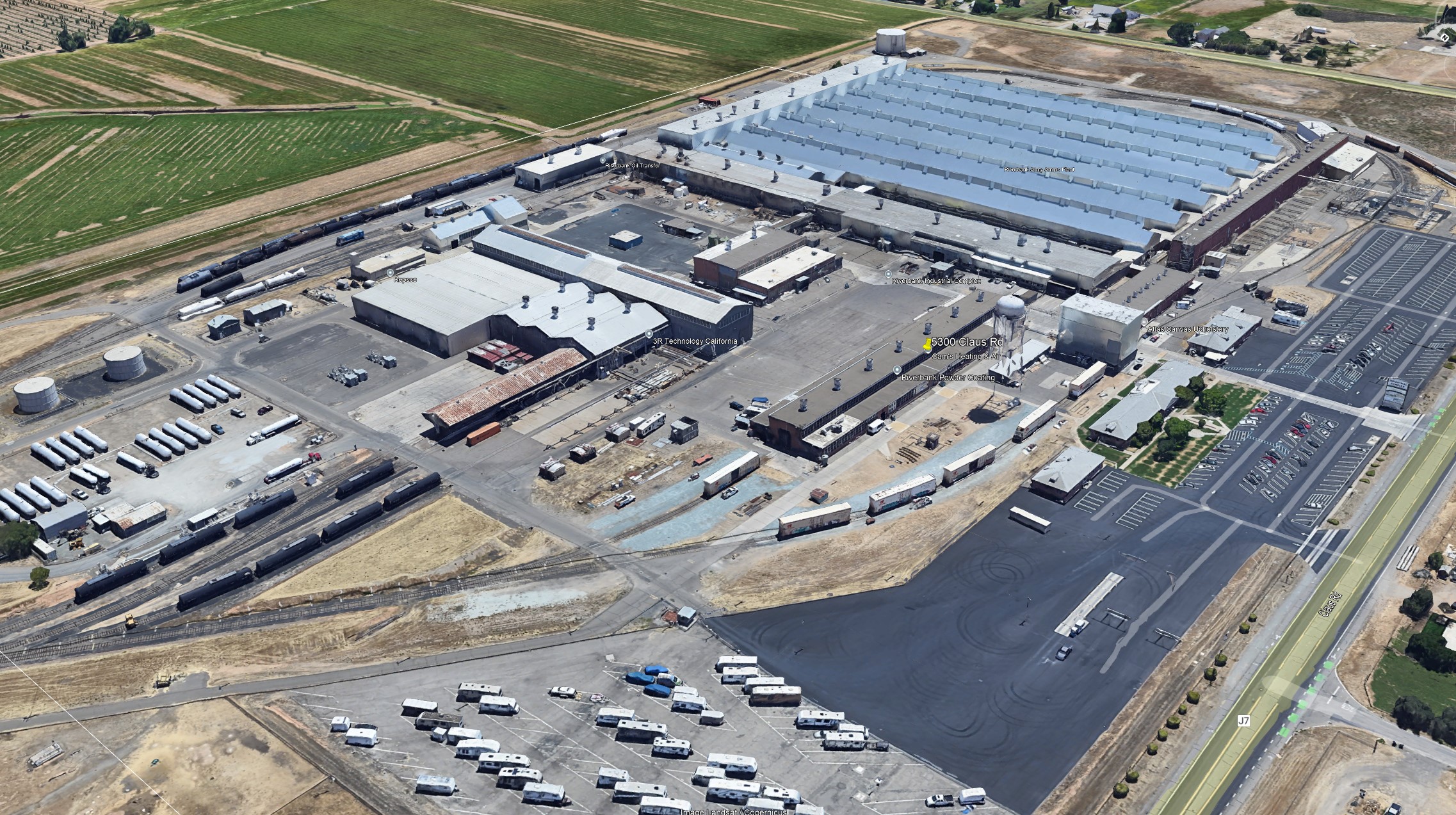
Aerial view of the Riverbank Industrial Complex at 5300 Claus Rd
03 · The Project

A computing facility inside the Riverbank Industrial Complex.

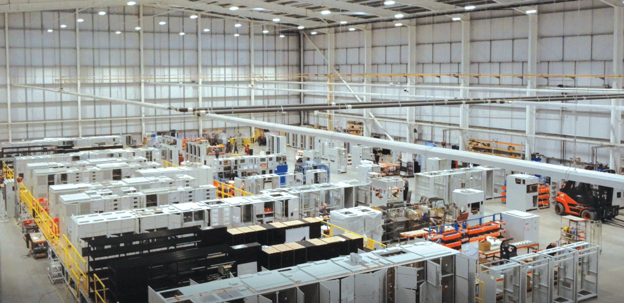
At the heart of this project is a modern computing facility built to house high-performance computing. We’re building it inside the existing Riverbank Industrial Complex, reusing site resources rather than starting from raw land.

Reuse

Housed inside existing buildings that once supported an aluminum smelter and U.S. Army ammunition casings production, not new construction.

Setback

All equipment sits more than 200 feet from the street, with no unsightly new structures built for computing. All computing equipment will be housed indoors in existing large industrial buildings. No use of loud and polluting turbines or generators.

Zoning

Built on land already zoned for industrial use at the Riverbank Industrial Complex, not agricultural land or land that could be used for housing.

Scale

The SCF will be one of 37 existing tenants at the Riverbank Industrial Complex: a modular, medium-sized computing facility, not a mega data center.

Expected Local Impact
$10M+/yr
New property tax revenue for
Stanislaus County & Riverbank
$5M+/yr
Of that, funding local
schools every year
Hundreds
Of construction jobs, plus
lasting local service jobs
04 · Sustainable by Design

Quiet, clean, and water‑wise by design.

Sustainability isn’t an add-on here: it’s the design. We’re building to be a good neighbor: protecting Riverbank’s water, air, and local grid, keeping noise low, and putting the resources the site already has to their best use.

How It Works

Water-wise cooling. Clean, quiet power.

Our computing facility is designed to be a quiet, clean neighbor. Its electricity is sourced from outside the Riverbank area using renewable hydroelectric and other clean power, reusing grid infrastructure originally built for the site’s former heavy industry. Cooling relies on recycled industrial water already on site, and any onsite power is designed to minimize local air-quality impact.

  • Electricity is sourced from outside the Riverbank area, reusing grid infrastructure built for the site’s former heavy industry. RTC does not strain local grid capacity or raise electricity costs for Riverbank ratepayers, and can supply excess power back to the grid.
  • Cooling water is recycled, non-drinkable industrial water drawn from existing on-site wells, paired with closed-loop, air-cooled chillers. No City of Riverbank drinking water is used.
  • No large, loud generators or gas turbines for day-to-day power. Low-decibel chillers keep noise below the levels already allowed by our industrial setting.
  • Clean grid power for day-to-day operation, with any onsite power designed to minimize local air-quality impact.
Computing equipment housed indoors inside an existing large industrial building
Water‑wise
Reuses onsite industrial water,
no Riverbank city water
Low‑noise
Low-decibel chillers; no turbines
or generators running
Grid‑friendly
Power sourced outside Riverbank,
no strain on the local grid
06 · Get Involved

Let’s build the future of Riverbank together.

Whether you’re a neighbor curious about the project or a business partner exploring an opportunity, we welcome the conversation.

For the Community

Curious about the project?

Reach out for community questions, education programs, and local events.

For Business & Partners

Exploring an opportunity?

Reach out for partnership and site inquiries.